Rajasthan’s food tells a story about where it is prepared. In villages around Udaipur, daily cooking follows the household rhythm. Someone prepares dough while another checks vegetables or heats water for tea. Recipes change with what is available. Visitors in a home kitchen can notice why local food varies between families.
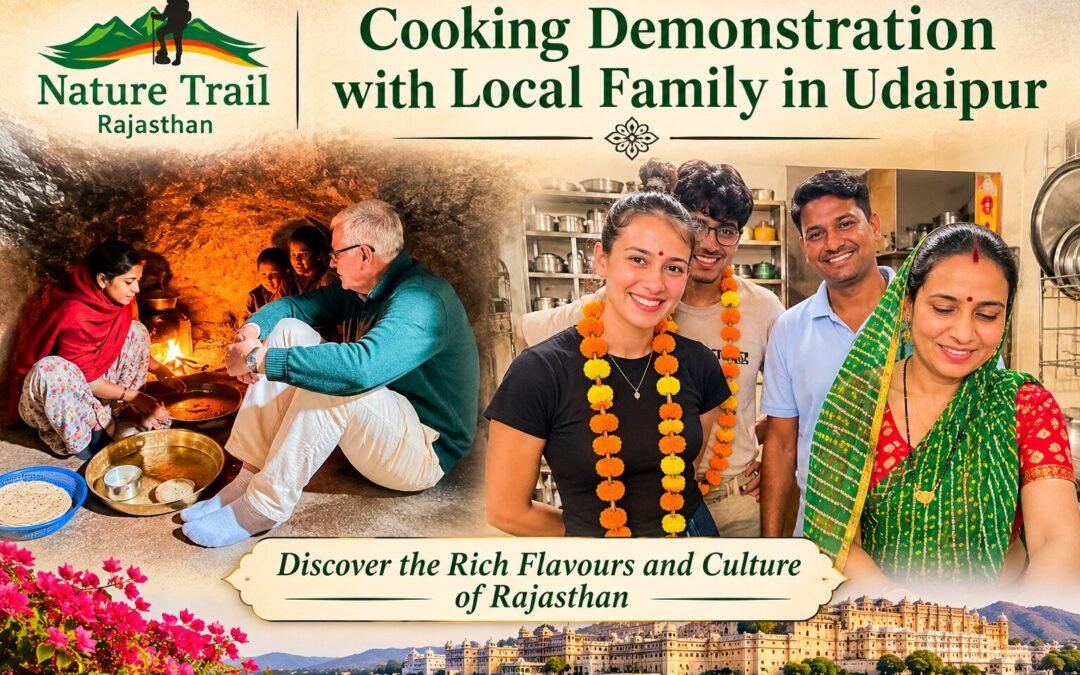
At Nature Trail Rajasthan, cooking sessions take place with a local family in Badi village, near Udaipur. Visitors see an everyday kitchen rather than a restaurant demonstration. The family shows how to cook each dish step by step. Guests can ask questions and help with cooking. People who join Cooking Classes in Rajasthan can learn how a local family makes its daily food. A session under Cooking Classes in Rajasthan also lets guests ask how recipes change between homes.
Learning in a family kitchen
The session begins with welcome drinks and a discussion about the planned dish. The family can ask about food preferences. Food changes with the season and the things people have at home. Some families like hot food. Others like mild food. Every family makes food in a different way.
The family teaches guests how to mix flour and water. Guests can make rotis too. They also learn to cook dal and vegetables.
Cooking Demonstrations With Local Family give guests time to ask about food and cooking. They can learn what food families make during farm work and festivals. They also learn how food is a part of daily family life. The session is less about a strict recipe card and more about choices made while cooking. Cooking Demonstrations with Local Family add context through these everyday conversations.
Food, ingredients and local habits
A normal meal may have roti, dal, vegetables, chutney and curd. The food can change from one home to another. Families use the food they have at home. In summer, they often use food that stays fresh for a long time. When fresh vegetables are available, they use them in meals. Rajasthani Traditional Food is made with care because water and cooking fuel are limited in some areas.
Guests learn how to cook spices before adding them to food. The family also explains how they use different ingredients. Every home may cook in a different way. Guests should tell the family if they cannot eat certain foods. This helps the family plan the meal.
The meal is shared after cooking. Sitting together gives guests a chance to ask about dishes and hear how the family serves them. A Traditional Dinner With an Indian Family can show how meals are adjusted for children, older relatives or guests. The focus stays on that day’s food.
Taking part at a natural pace
Some visitors watch first; others help with chopping, stirring or shaping dough. Both approaches are fine. The family guides each task and explains unfamiliar tools. The pace is flexible because cooking follows household needs.
A Rajasthani Food Cooking Experience can help visitors recognise ingredients seen in local markets but not know how to use. They can ask how to use spices, how to pick vegetables, and why food changes with the season. These conversations make the cooking easier to remember at home. The host may share small tips for adapting a recipe in a home kitchen.
The session lasts around three to four hours, depending on the menu. Visitors should wear comfortable clothing and follow the family’s guidance. Washing hands before handling food matters. Guests should ask before using equipment or taking photographs.
Planning a visit
The activity takes place in Badi village, outside central Udaipur. Travel time varies with traffic and starting point, so guests should confirm transport before setting out. The village setting helps visitors see ordinary surroundings beyond the city’s main visitor areas.
Nature Trail Rajasthan coordinates the visit and shares details in advance before the session. Visitors can ask about menu, timing, group size and dietary needs. The address for communication is Badi-Hawala Road, Badi, Udaipur – 313025, Rajasthan, India.
A kitchen visit may leave guests with more than a recipe. They may remember dough being rolled, spices warming in a pan or the way a family shares its meal.These moments help guests learn more about local food. People interested in Cooking Classes in Rajasthan can ask questions and see how a local family cooks food at home. Cooking Classes in Rajasthan can begin with simple tasks rather than formal lessons.
For visitors wanting to understand local food through its cooks, the session offers an introduction. Nature Trail Rajasthan keeps the focus on the family’s methods and the everyday setting in which the meal is made. For some guests, Cooking Classes in Rajasthan are a useful way to understand food traditions.